skip to main |
skip to sidebar
 All photos: La Prensa, Honduras
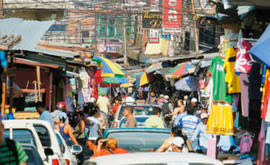
 The larger cities in Honduras, and probably many cities in Central America, have a problem with street vendors, many of whom have semi-permanent locations in the center of town. Sidewalks become completely impassable and even streets become partly or completely impassable by car.
 The business buildings buried behind the wood, aluminum and plastic stalls and umbrellas are difficult to find and hard to enter.
The street vendors naturally want to be located where the majority of the traffic is and have resisted attempts in the past to move them other, less central locations. Sometimes even violent confrontations have occurred.
San Pedro Sula is the second largest city and industrial capital of Honduras. San Pedro prides itself on being the most modern city in Honduras. After 30 years of repeated attempts, they have finally succeeded in moving the vendors out of the central part of the city.
 The streets were cleaned, some were paved and painted with traffic stripes, and businesses that hadn't seen the light of day in 30 years were revealed.

 What a difference. It was such a feat that the cleanup made the front page of La Prensa two days in a row. The related articles used words like splendor, shining, and impeccable.
As shown by the last two photos, many people couldn't get used to the idea of walking on the sidewalks and continued to walk in the street.

 Wow. Look at those electrical wires in the last photo! There are almost enough wires to provide shade from the hot sun for the pedestrians.
 Fabi, the Fashionista
Here is a story, as best I can remember, as related to me from El Jefe.
I hope that it is not symptomatic of the general state of mind of Hondurans, but I am very afraid that it is.
El Jefe went to lunch with six other people last week. Five were university students and one was a professor of psychology. One 19-year-old who is studying law began to expound upon the fact that corruption would never change in Honduras, that "if God destroyed the earth and then resurrected it, Honduras would return just as corrupt as before."
The student, who we will call Juan, said that many of the law students who were government employees were already corruptos and the others were anxious to learn how to be corruptos. Juan said that he had worked in the government in Tegucigalpa for a year for an uncle and everyone there, without exception, was corrupt. (One of the perks of being related to a corrupto, even as an incompetent teenager, is that you can always get a well-paying government job.)
Juan said that teachers are corrupt. He said that former president Maduro made a big mistake in agreeing to raise the teachers' salaries, that the teachers don't teach anything anymore. They don't care as long as they get their paychecks.
He's convinced that Honduras is no different than the rest of the world and that makes it okay. He remarked that all the rich corruptos have children, and their children have children, and they will all be following their corrupt parent's footsteps into power. He said that it will never change. El Jefe said, "It WILL change if you change! If you and I and all of us don't do it, and teach our children not to do it, it WILL eventually change." He asked, "What did your mother teach you? I have principles and honesty. The first time that you do something corrupt, the first time that you try to screw someone − you are one of them!"Juan replied, "If you can't fight it, you might as well be corrupt so that you can be rich, too. Anyone who is honest is STUPID because corruption will never change, and they will always be poor.
"
Disgusted, El Jefe said, "I don't care what you do. All those attorneys who are protecting the criminals and the corrupt are getting shot down in the streets anyway, so do what you want. You may end up that way, too."
By then, the student's face turned red and he was extremely insulted. Juan turned his face away as if he wasn't going to listen to El Jefe anymore.
I asked, hopefully, what the other people had said. El Jefe said, "Not. one. word."
Finally the professor said, "Well, let's not fight. We are here to enjoy lunch."
My stomach sank when he told me that.
The one person in authority in the group said nothing to encourage these young people to try to change the status quo, not even in how they live their own personal lives and deeds, nor even one word of support for someone proposing that the right thing to do is to stand up to corruption.
And what makes Juan, this 19-year-old corrupto wannabe, so dangerous is that he is an elementary school teacher by day. What is he teaching his students?
So out of a group of seven educated people, one has plans to be corrupt at the first opportunity, five will sit back and not speak against it even rhetorically, and only one will speak out and try to lead by example.
I'm proud of my Catracho, but are their enough like him to make a difference?

 All photos: La Prensa, Honduras
 The larger cities in Honduras, and probably many cities in Central America, have a problem with street vendors, many of whom have semi-permanent locations in the center of town. Sidewalks become completely impassable and even streets become partly or completely impassable by car.
 The business buildings buried behind the wood, aluminum and plastic stalls and umbrellas are difficult to find and hard to enter.

 What a difference. It was such a feat that the cleanup made the front page of La Prensa two days in a row. The related articles used words like splendor, shining, and impeccable.
 Wow. Look at those electrical wires in the last photo! There are almost enough wires to provide shade from the hot sun for the pedestrians.


 Welcome to my Blogicito —



