Showing posts with label guest bloggers. Show all posts

November 15, 2013

Honduran Election 2013: Fear as a Strategy

2013 Honduras presidential ballot

Guest Blog by Jorge Gallardo Rius


The two leading contenders in the Honduran Election of 2013 have based their winning strategies on fear.

The leading contender according to recent polls, Juan Orlando Hernandez of the National Party, has identified himself with hawkish views and promotes his candidacy by harking on fear of the extreme left. While the leading leftist contender, Xiomara Castro de Zelaya, wife of deposed ex-president Zelaya and openly supported by South American ex-presidents, is promoting the fear of military repression.

The big issue for Mr. Hernandez at this point is trying to make permanent a military police that was originally slated as temporary while the crime rate remained high.  They argue that the extreme left wants this force to disappear.  Whereas, the Libre Party supporters went to the US Congress and tried to turn a land dispute into a case of state repression and a sign that the election process was tainted in order to strengthen their followers’ anti-constitutional beliefs.

The use of these fears as campaign themes is probably the result of an analysis of the mind frame of Hondurans after the events of 2009 in which a left-right polarization came to be, and the intent is to make the center disappear as an option to Honduran voters.  They want us to believe that there is no center, no real options in the middle, because 25% of probable voters, enough to decide the outcome haven’t decided yet and they just might go massively to the center.

But this fear based strategy has been known to backfire.  Initially it was working, but apparently, it was turned on too soon.  Many independent voters, tired of the never-ending conflicts, are fleeing both extremes and moving to the center.  After 8 years of reckless law-making by both sides while impunity reigns, and excessive expenditures that can’t be paid off, people are now realizing that we need a government of stability and austerity.

In the internal elections, the second strongest party votes was won by the centrist candidate Mauricio Villeda and by making the center disappear both sides are trying to steal votes from this candidate.  Mr. Villeda of the Liberal Party, unanimously recognized for his honesty and who, in all the recent polls proved to be the fastest growing movement, may become the one that benefits the most by the failure of the fear strategies and the convergence to the center.  He is backed by a strong organization with experience in past elections.

It just might be that Mr. Villeda peaks at the precise moment and produces an unexpected upset.

~~~~~~~~~

Jorge Gallardo Rius is a Honduran citizen who was born in La Ceiba and currently lives in Tegucigalpa. He studied in Louisiana, Houston, and Romania and is an Information Systems Analyst. Jorge's mother was a US citizen so he grew up speaking both languages at home. For a time, he wrote a weekly column on Education and Technology for an English-language weekly newspaper. He offers English/Spanish and Spanish/English translations. Sr. Gallardo can be contacted at jgallardo515 at yahoo.com and we welcome your comments here as well.


May 30, 2012

Guest blog: The best laid plans

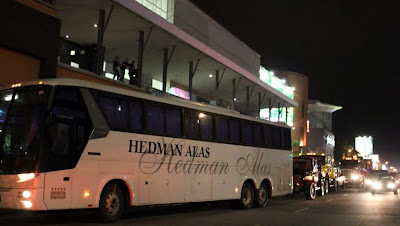
Hedman Alas bus
Hedman Alas luxury bus

The following is a guest blog from Gail. Gail is an American who owns a house on the island Utila and has been coming to Honduras for several years.


The plan was simple: take TACA to San Pedro Sula and spend the night, take the Hedman Alas bus to La Ceiba and spend the night, take the morning ferry to Utila and, finally, a dory to the house on the South Shore. It didn’t quite go as planned…

We arrived on TACA in San Pedro Sula at 6 pm, only to be informed that three of our four bags had not arrived with us. This is not unusual – it is rare that we get all of our luggage on time, but it generally shows up on the next flight some hours later. This time, we were on the last flight. The TACA representative assured me that the bags would be in San Pedro Sula the next morning, but we were going to be on the bus to La Ceiba by that time.

I asked TACA to deliver the bags to the Gran Hotel Paris in La Ceiba. We were actually staying with friends in La Ceiba for the night on this trip, but I’d accidentally left my address book with their contact info at home. We had stayed at the Paris on other trips over the years and I knew they could store the bags and would be reliable for their security - plus it was the only idea I could come up with on such short notice.

After filling out the TACA paperwork, we went to La Posada (a Bed and Breakfast in San Pedro Sula that we were trying for the first time – and will be using from now on [Trip Advisor reviews]) for the night. The next morning we were to take the Hedman Alas bus to La Ceiba, but due to the highway closure by protesters, our 10:30 am bus had been cancelled. We wound up on the 3:20 pm bus instead. Hedman Alas was able to contact our friends to let them know that we would be arriving later than we’d arranged, but I didn’t think to ask them to call Hotel Gran Paris so I could explain the delivery of our bags to them. That turned out to be a huge mistake. HUGE!

On our arrival in La Ceiba at 6:30 pm, we went to Hotel Paris to see if the bags had arrived. Marvin (now nicknamed Marvelous Marvin for his efforts) was manning the desk and had some notes from the day shift on the bags. Because we were not registered, there was a lot of confusion. After much back-and-forth in Spanish and English, it turned out that TACA had kept the bags in San Pedro Sula because our luggage tags read Utila as the final destination. End result — no bags today. We would stay over an extra day in La Ceiba to allow them to catch up.

The third morning, we started making phone calls early. The goal was to be on the morning ferry to Utila the next day. Marvin had bad news for us – TACA now wanted to send our luggage to Utila, which meant that we would be without clothes and other packed items for another four days, which was when the next flight to Utila was scheduled. Since we were carrying construction supplies for house repairs, this would a major setback for us, not to mention the fact that the clothes we had been wearing were getting pretty ripe by now. Also, we would have to rent a boat to town in Utila to meet the plane — which would cost us one day and about $50 (boat, taxi, lunch, tips), neither of which we could afford to lose. The best solution was to get them to put the bags on the Hedman Alas bus to La Ceiba.

Thank goodness our host was Honduran, because we could have never managed over the phone with our limited Spanish. It also helped that he has the patience of a saint. He was able to reach someone in TACA and explain the situation. The TACA rep promptly told us that there is no way the bags could be sent today because they would only send bags with Hedman Alas (an interesting endorsement of the bus company) and that there was only one bus that left the airport at 6 am. Well, this floored us, since we knew there were four buses daily leaving the airport, all connecting to La Ceiba! A call to Hedman Alas confirmed this.

It took several phone calls and about an hour to convince TACA that it was possible to get the bags onto a non-6 am Hedman Alas bus. She reluctantly agreed to put the bags onto the 2:15 bus. Mind you, this is a matter of walking 200 feet from the airline’s baggage area to the bus office in the same building — it’s not like she had to arrange delivery across town. We were promised a phone call when the arrangements had been made.

Several hours later, we started calling to find out what the situation was. The lady whom we had spoken with had gone to lunch. The deadline for making the bus was quickly approaching, so we begged the person in the office to please try to push the paperwork through. We were elated when she reassured us that it was on the bus that would arrive at 6:30 pm.

With the bags on their way, we relaxed until it was time to meet the 6:30 pm bus. We made sure we were there in plenty of time, paperwork in hand. After the crowd claiming luggage thinned, we came forward to get ours. Nada. The bags weren’t there.

The Hedman Alas ticket man looked up our claim numbers on the computer and confirmed that they would be on the 9:30 pm bus – but we couldn’t get the bags until the following morning because the office would be closed! I suspect we were looking pretty crazy by now. There was no way to make the morning ferry if we had to wait until the office opened. The staff was sympathetic, but had no authority to change the situation. As luck would have it, our hosts had contacts in Hedman Alas who were able to assist us. Phone calls were made. The office staff was authorized to accommodate us, even if they had to stay late.

We went to dinner and returned for the last bus of the day. For one heart-stopping moment, we thought our luggage had not arrived, but it turned up in a compartment on the opposite side of the bus. Success!!

The people working at Hedman Alas proved to be exceptionally helpful. From the woman in San Pedro Sula who came looking for me after I’d inquired about making a phone call to our hosts to explain we would not be arriving as planned (I was trying to find a phone number in old e-mails on my laptop – she was following up to make sure the call was placed), the ticket seller in La Ceiba who patiently searched for our bags in the computer and bravely faced the crazy gringa with courtesy and concern, the manager who was able to arrange for us to get the bags after hours and even the baggage handler Fidel, who was as happy as we were to see the luggage arrive but carefully made sure that the bag claim numbers matched on our paperwork. It was all handled very professionally.

Every time we have taken Hedman Alas, we have been impressed with the personnel. Their security guards, counter agents, and drivers seem to be well trained in customer service. The office workers and management were able to think outside the box in solving a problem. Security is taken VERY seriously. The fact that TACA will only use Hedman Alas to deliver luggage is a testament to their service. The bus terminals are clean and comfortable. I will always use Hedman Alas and have no qualms about recommending them to anyone who travels by bus in Honduras.

Life is always an adventure in Honduras. Hedman Alas makes it a better one.

~~~~~~~~~~~~~~~~~~~

Credit were credit is due! While TACA airlines is infamous for not putting luggage on the same plan as passengers, a common joke is that the only things that run on time in Honduras are the Hedman Alas buses. I highly recommend traveling by Hedman as they take safety and security very seriously.

You can find their webpage here which also includes an on-line chat. Hedman Alas also has an active bilingual Facebook presence in case your questions are not answered at the website. And no, this is not a paid advertisement. Just giving credit to a well-run Honduras business.

In case you didn't guess, we were the hosts and El Jefe was the knight in shining armor, as was Aaron Hedman who made sure that the employees had instructions to release the bags after hours.


November 8, 2011

Guest blog: Poverty equals crime

Honduran house

The following is a guest response to "Crime is out of Control in Honduras":


I took the time to read your thoughts on the ongoing violence in Honduras and I can add that the only way things are going to get better in Honduras is by getting as many people out of poverty as possible.

This rampant poverty, lack of education and lack opportunities drives some young people to become delinquents and gang members. They grow up to become thieves and killers. They grow up to believe the only way to get ahead is by going against the system and taking advantage of those who can be taken advantage of. They feel above the law because many of them are members of the law themselves, members of the government themselves, or they work for a corrupt government official or corrupt law enforcement official.

And if they don't work for anyone but themselves, they chose to be criminals because they know they can get away with it as police forces are incapable of pursuing every law breaker out there. Unless the government focuses its resources on purging the system and washing out the scum and worthless, the government will continue to be in the crapper, and in turn, everyone else in the country.

I was watching CNN en Español sometime before the events at the San Pedro Sula airport, and they were talking about the constant and prevalent violence in Honduras. The CNN anchorwoman opened her news story by saying "In Honduras, where every adult citizen is entitled to own up to five firearms, crime and violence continues to dominate". Her opening statement was to point out that Honduras was a society allowed to be armed as to imply that the fact that citizens have the legal right to own weapons, that it may be a contributor to the violence.

In reality, legal ownership of firearms is not the real contributor to crime or violence since many of these crimes and killings are committed with weapons of illicit origin or illegal to be in the hands of civilians.

Committing acts of violence is already a crime and killing is already a crime so clearly passing laws that penalize this or that won't make any difference in a society and culture where killing is the norm. People don't commit murder because there's a law that allows them to own a gun (we know the weapons used in crimes are of the illicit nature to begin with) nor do they commit murder because it isn't illegal (it is illegal, we all know that), they kill because they have been raised in a culture where it's okay to do whatever you have to do to get by and because they know the chances of being caught and punished for their crimes are slim.

The government can pass all the laws they want or even take away the right to bear arms entirely since they could as gun ownership is not a constitutional right in Honduras, but it would still not reduce crime. There are already thousands of illegal guns in the hands of criminals and as long as the laws are not enforced and police forces are not properly equipped with the funding, the manpower, a descent salary, the equipment and the tools to do their jobs, thugs will continue to rule the streets.

— The author lives in the United States, lived in Honduras for several years before, has traveled back and forth to Honduras since 1994, and is familiar with Honduran culture and its people. He graciously consented to the publishing of his response to "Crime is out of control in Honduras". Your comments are welcome.

January 7, 2011

Guest Blog: The New Wikileak from Le Monde

US Ambassador Hugo Llorens
Photo: La Prensa, Honduras


The New Wikileak from Le Monde
—by Jorge Gallardo

According to the latest Wikileak released by the French daily "Le Monde", US Ambassador Llorens reports that 10 days before the ouster of President Manuel Zelaya, the High Command of the Honduran Armed Forces faced a dilemma. Let's give it its proper name: They faced a MORAL dilemma: Whether to blindly follow a rogue leader giving illegal orders or whether to follow their conscience, uphold the rule of law and protect the Constitution and the democratic institutions that conform it, that was the question.

Certainly, this is not a new dilemma. The German High Command faced a similar dilemma in Nazi Germany. They made the wrong choice and paid dearly with capital punishments and life imprisonments, when the Nuremburg Trials determined that they should have followed their conscience. Also, we cannot neglect the high price that the German people paid for this folly.

It is clear from Mr. Llorens's cable that he expected them to follow HIS lead: "They will not do anything without the support of the American Administration," he states. Indifferent to the consequences of Zelaya's actions to the Honduran people, Mr. Llorens naively believed that despite Zelaya's disruption of Honduran democracy in a Chavez style coup, he could still be drawn into the American's sphere of influence. "The fact that Zelaya obeys his personality rather than ideology means he can be manipulated by those seeking to establish a regime similar to [Venezuelan President Hugo] Chavez, but it can also be manipulated by us."

Despite Mr. Llorens' understanding that Zelaya's "erratic behavior" was creating a major constitutional confrontation due to his lack of respect for the separation of powers and his clear understanding that Zelaya was attempting to impose a Chavez style 21st Century Socialism model, Mr. Llorens continued to participate in Zelaya's calls for an unconstitutional and illegal assembly, believing that he could rally everyone else into "dialogues" that would peacefully allow the country to fall into a socialist state, but manipulated by the US. He shows no concern for the Honduran people who would have to endure 30 years of "erratic" rule by Zelaya, the Caudillo, who had shown little concern "to address the problems of Honduras (poverty, corruption and crime)."

Thus, his surprise and frustration are understandable, when instead of following blindly into the Chavez trap or following blindly the American Administration's lead, the Honduran High Military Command, the Honduran Supreme Court and the Honduran democratically-elected Congress followed their own conscience and defended democracy in Honduras. "They conspired," Mr. Llorens later wrote. Without any support, they knew that they would face incredibly difficult hardships, but felt it was their duty to protect the rule of law and that their conscience would be clean when they acted according to its dictates.

Conscience, what a bugger it is!

Perhaps the rest of the world doesn't understand, but to the majority of Hondurans these "coup" leaders are unsung heroes that time and history will honor.

~~~~~~~~~~~

Jorge Gallardo Rius is a Honduran citizen who was born in La Ceiba and currently lives in Tegucigalpa. He studied in Louisiana, Houston, and Romania and is currently an Information Systems Analyst. Jorge's mother was a US citizen so he grew up speaking both languages at home. For a time, he wrote a weekly column on Education and Technology for an English-language weekly newspaper. He offers English/Spanish and Spanish/English translations. Sr. Gallardo can be contacted at jgallardo515 at yahoo.com and we welcome your comments here as well.

December 19, 2010

Guest blog: Wikileaks and the Honduran Crisis

Wikileaks and the Honduran Crisis
- by Jorge Gallardo Rius

Given that the Wikileaks disclosures have again brought to life the debate on the Honduran Crisis, I think it's important to make a new considerations on the data.

1. It should be quite clear that the Llorens and Ford documents are simply opinions. What is specially important about the Ford document is that he foretold the events that would occur more than a year later when he warned that Zelaya would be a danger to Honduran Democracy. This is how scientific theories are established: by their ability to foretell events yet unknown. This leads credence to Mr. Ford's opinion.

2. Mr. Llorens tries to make a legal case for the illegality of Zelaya's ouster. We note also that the US Library of Congress's Law Library made an equally valid case for the legality of the actions. The existence of these two opposite opinions leads us to two conclusions: First that the Honduran impeachment process is faulty and lends itself to legal and illegal interpretations simultaneously and thus, second, its like the famous question of whether you want to see the glass of water "half empty or half full".

3. The only truly valid opinion in this case, and it should be recognized as such, is that of the Honduran Supreme Court that ruled the actions illegal and consequently ordered his arrest BEFORE the events ocurred. The rest can opinionate one way or the other whether they were right or wrong as it will surely continue forever and ever, but the fact remains the the only valid, legal opinion at that point, before the events, was that of the Honduran Supreme Court that ordered his arrest.

While the question of legality or illegality is important, to the majority of Hondurans there is a more important consideration.

4. It should be quite clear to all reasonable persons that Zelaya intended to lead Honduras down the path of a 21st Century Socialism model, that he was following Hugo Chavez's script for a Constituent Assembly (as Hitler did in 1933) and that the intention was to install a Cuban/Venezuelan style regime in Honduras. These facts are evident from the support that Chavez gave to the process before and after the events of June 28th, 2009.
5. Despite all the problems and faults of our democratic system, installed and maintained by the 1982 Constitution, the vast majorities of the Honduran people do not want and oppose a Communist regime for our country. This is evident in the massive voting that took place in the November 2009 election, held according to the laws prescribed by the 1982 Constitution which establishes the Honduran Democratic System, based on the rule of law, the separation of powers, the alternation of power in the Executive branch and free elections held regularly every 4 years and in which we choose our next President, congressmen and mayors.

6. Some argue that the elections were not valid because they were not overseen by the OAS and the Carter Center, which did oversee elections known to be corrupt and said nothing. They were overseen by very important organizations, just as legal, valid and experienced. The thing is that the elections were valid to more than 2 million Hondurans and the vast majority of our population. Look at the results of elections in Haiti, overseen by the OAS and the Carter Center: Not accepted by the population.

7. Thus, between Mr. Llorens's half-empty legal interpretation of the events of June 28th and the US Library of Congress and the Honduran supreme Court's half-full legal interpretation of the same events, the majority of Hondurans support the half-full version, an opinion supported and expressed by the Honduran Congress in December, 2009.

So, what is Democracy? Isn't it, as Lincoln said "a government of the people, for the people and by the people"? It is not up to foreign powers, be they the US or Venezuela, to decide whether Honduras is a democratic country, or even for multinational organizations, such as the OAS to decide. It is we, the people of Honduras, who have the right to determine whether our country is democratic or not and the kind of democracy that we cherish. And that's what we did in the 2009 election.

There is a third consideration that should be made in the evaluation of the current Honduran situation.

1. In the United Nations listing of poor, middle income and developed nations, Honduras is listed among the middle income nations. In order to pass from a poor country to a middle income country as it did in 2007 under Zelaya's rule, one of the important indicators is that a country must present at least 3 years of continuous over-5% economic growth. This happened in the years 2004, 2005 and 2006; that is, the last 2 years of Maduro's presidency and the first year of President Zelaya's term. Then it shot downwards again.

2. Obviously, to understand this phenomenon, you must look at the actions taken during the first years of the Maduro Presidency, in which he consolidated a strong control of the macroeconomic indicators, contained government expenses, installed new measures to promote transparency and put order into the financial markets. It produced 3 years of economic growth.

3. It also achieved the pardoning of our foreign debt and the consolidation of the Poverty Reduction Strategy in which funds used to cancel foreign debt could now be used for Poverty Reduction Programs, which for transparency's sake would be overseen by the nations who were condoning our foreign debt, but guided by the "dialogue tables" that had been carried out at the start of the Maduro Presidency.

4. This should explain why the common expression, very popular in the media when Zelaya was elected, was that "The table is set". Zelaya's government entering in January 2006 had all the tools to carry out a progressive reform and mark a substantial decrease in the real poverty levels of Honduras.

5. But Zelaya's new government put an end to poverty reduction programs, to the efforts to achieve the Millennium Development Goals and all efforts to end endemic poverty, and began a conscience-buying, political hand-out structure to benefit his close friends and family (As Mr. Ford pointed out). 18 months after Zelaya took power, Sweden, one of the participating governments in the Poverty Reduction Strategy, pulled out.

6. In his 3 ½ years, Zelaya returned us to a bankrupt nation, with reduced growth indicators, an education system in shambles, drove the Workers' Bank and the Teachers' Pension Fund into bankruptcy, and left is even without a national budget.

Zelaya's incompetence in the economic issues has left the majority of Hondurans asking: where did all the funds for poverty reduction and the economic stability go? Truly, a President can't be removed for being incompetent as Zelaya proved to be, but for the attempted destruction of the democratic system, yet one must ask where do the foreigners think that Zelaya's "popularity" rests?

While pundits can argue forever whether it was a coup or not, the majority of Hondurans view the overall questions: First, the "coup or not" saved the country from a communist regime. Second, it convinced us all that the crisis was due to the abuses of the political classes and that we must remain always vigilant. And thirdly, we are convinced that the only way to end the abuse of the political class, whichever party they belong to or social system they promote, is to require transparency and the rule of law. These conclusions are supported by the recent Latin American Barometer poll in Honduras.

It is on this point, the solution to the crisis, that the foreign governments have been sadly amiss with their insistence on returning Zelaya without facing trials to Honduras. We have no doubt that Zelaya was corrupt and we believe that Zelaya must come and face the justice system, whereas currently to lay to rest the "coup" theories of the South American Autocracies there is a new attempt to whitewash Zelaya's corruption and abuse of power. The majority of Honduran people simply want Zelaya to become the first victim of legality, transparency, honesty and decency, and thus set an example that will serve present and future generations of what happens when the polititians abuse the power given to them by the people.

Sadly, the current US administration and our European friends have left us without the support we need to defend decency in our country.


~~~~~~~~~~~

Jorge Gallardo Rius is a Honduran citizen who was born in La Ceiba and currently lives in Tegucigalpa. He studied in Louisiana, Houston, and Romania and is currently an Information Systems Analyst. Jorge's mother was a US citizen so he grew up speaking both languages at home. For a time, he wrote a weekly column on Education and Technology for an English-language weekly newspaper. He offers English/Spanish and Spanish/English translations. Sr. Gallardo can be contacted at jgallardo515 at yahoo.com

November 19, 2010

Guest response to: The falling US dollar and Lempira


The following guest blog is by Jorge Gallardo Ruis in response to
Guest Blog: The falling US dollar and Lempira.


The unknown author also forgets that most of the imported articles we purchase come from the US. When the dollar rises and falls, it does so with respect to other currencies that are not very common in Honduras: The Euro, the British pound, the Yen and most recently, the Chinese currency.

Thus, inflation is affected very little when the dollar rises and falls, or at least, we're affected the least, compared to the idea that the Lempira fell against the dollar. That would promote our exports to the US (our greatest market) but push inflation as the prices rise on consumer goods imported from the US, as the author says, and that would affect us much more than "riding" the dollar up and down against the other currencies. In this sense we are still living by the dollar standard as we were in the 60s, except the ratio has changed.


What the author recommends: "About the only way to keep up the living standard is have a more efficient economy and trying to reduce the import of oil and a lot of food items and became more self sufficient in energy." was called in the 60s "Import substitution" and would have worked well, as it did in the Asian Tigers, except that's when we had the real coups which were a means for a few to mass accumulate the wealth. General Oswaldo Lopez Arellano became one of the wealthiest men in Honduras together with a clique of generals and servants, while they beat up on students.

I would say Import Substitution is still the current policy, with the biggest import, oil, as its primary target. That is why those recent Honduran contracts for renewable energy were so important.

The stability of the Lempira with respect to the dollar is maintained, not quite by manipulation which sounds kind of nasty, but by a series of macro-economic mechanisms which include primarily the open market where dollars are made available to big traders (the banks as intermediaries and big projects), but also include the interest rates to try to attract foreign capital. The problem was that the interest rate had created accumulation of funds but there were no big projects to invest in, circling back to the renewable energy projects, which Zelaya was holding back. His only investment project was "la cuarta urna" as we all know.

But these projects will not create as many jobs as manufacturing and infrastructure would. Appreciating the Lempira with respect to the dollar, as the author recommends would, yes, reduce inflation which is small, but would also affect our manufacturing exports by making them more expensive in the US. So, appreciating the Lempira would hurt the slow recovery we are having in industrial production and affect adversely job creation, a current priority.

I would say that riding the dollar while the dollar is depreciating should force us to look for new markets for manufacture and tourism in Europe and Asia where we're becoming cheaper to buy from and visit.


Many thanks go to Jorge Gallardo for allowing me to post this article. You can find other Blogicito guest articles by Sr. Gallardo here.

Jorge Gallardo Rius is a Honduran citizen who was born in La Ceiba and currently lives in Tegucigalpa. He studied in Louisiana, Houston, and Romania and is currently an Information Systems Analyst. Jorge's mother was a US citizen so he grew up speaking both languages at home. For a time, he wrote a weekly column on Education and Technology for an English-language weekly newspaper. He offers English/Spanish and Spanish/English translations. Sr. Gallardo can be contacted at jgallardo515 at yahoo.com

Your comments on this article are welcomed.

November 17, 2010

Quantitative Easing in layman's terms

Since the last guest article mentioned 'Quantitative Easing', a little more explanation in layman's terms might be needed. This video is priceless!


The last half gets a little more political than some may be comfortable with. Feel free to leave a comment.

Hat tip to Henry via Steve.

November 16, 2010

Guest Blog: The Falling Dollar and Lempira


The following is a guest blog from a reader who has asked not to use his name.

The Falling Dollar and Lempira

The American dollar is losing value against a basket of world currencies, about 10% so far this year. The reasons are many and complex. The world economic crisis, large US trade deficits and foremost the QE (Quantitative Easing) or in other words the massive infusion of additional new money in the financial system. The money printing presses are working overtime.

This QE was supposed to stimulate the economy and reduce unemployment. It has mostly failed but prevented the total collapse of the banking system. The Lempira for a few years already and at the present is fixed by manipulation of the Central Bank of Honduras at about L. 19.02 to U.S. $1.00. Whatever happens to the U.S. dollar affects the Lempira. Since when the value of the U.S. dollar goes down so does the Lempira, this is good for Honduran exporters, but it will result in more inflation, since many items for daily consumption will have to be paid in dollars.

Many countries like Brazil are concerned that their currencies appreciate too fast against the dollar and they will have problems exporting. There is also a massive outflow of U.S. dollars to emerging countries, where interest rates are much higher than in the U.S., and at the same time their currencies rise in value against the U.S.dollar. Interest rates for term deposit in Lempiras are 8 to 10% compared to 1 to 3% for U.S.dollar deposits in North America.

If the Central Bank of Honduras does not appreciate the value of the Lempira, then the country will be affected by greater inflation with all of its disadvantages and problems. What can Honduras do? About the only way to keep up the living standard is have a more efficient economy and trying to reduce the import of oil and a lot of food items and became more self sufficient in energy.

The great amount money (remesas) which Hondurans living in United States are sending to Honduras to support their relatives in their daily living. As inflation increases, this money will reduce their buying power.

If the price of a basket of food (canasta basica) goes through the roof, there will be riots in the streets and a big cry to raise the minimum wages much higher. This will result in more inflation and unemployment and so there will be a vicious circle of higher inflation and higher wages and on and on it goes.

October 27, 2010

Guest Blog: Cola Country

Typical Honduran restaurant plateTypical BBQ restaurant plate

The following is a guest blog from a reader concerned about typical eating habits in Honduras:

Cola Country
by Rudi Kerkmann

The state of health of people is in great part dependent on what they eat or if they exercise. What they eat and drink also to a great extent is dependent on their knowledge of nutrition, their customs, buying power, and will power. Meals need to be balanced with the proper amount of proteins 30%, carbohydrates 40%' and healthy fats 30%. Carbohydrates should be mostly low density vegetables and fruits and some whole grain products. The proteins should be, low fat meat and dairy products, and fish.

How unfortunate it is that in Honduras, often people do not have enough money to buy healthy food and are enticed by relentless advertising to buy food which is unhealthy, processed, and has a great amount of sodium, chemicals, and sugar to prolong their shelf life and make them taste good. This food is imported from many countries in the world. These food chains do not care about customer's health; it is all about increasing their sales and it is all about money.

Hondurans are not used to eating vegetables. I notice that people like to eat fried food and also barbecued meat; both are unhealthy. It is much better to buy healthy fresh food which should include a great deal of vegetables and fruits, instead of processed food.

One time I had to wait near a 'pulperia' in the morning and it was sad to see what people buy for breakfast: a bottle of cola and a bag of sweet bread or chips. Some even bought a carton of orange juice which is also not healthy, as it contains many chemicals and sugar. These people do not know the damage they are doing to themselves or perhaps they do not care about it. It is possible to buy 15 to 20 oranges or more for the price of one litter of cola. Chips have a high content of bad fat and other unhealthy ingredients. I see a lot of chips being eaten in Honduras.

I know that many working Hondurans have the custom to rely for their lunch on restaurant take-out or a food stand nearby and it takes too much money out of their pay check. How much healthier would it be to prepare at home a big bowl of salad with tomatoes, green pepper, onions, etc. with a tablespoon of olive oil and apple or balsamic vinegar, accompanied with a piece of chicken or low fat cheese or fish, no more than two tortillas and perhaps a piece of corn. Always eat a piece of fruit or banana after lunch. Drink water, pure fruit juice, or green tea instead of cola or similar sugary drinks.

We all know already that almost all food served in fast food outlets is unhealthy. The upper and middle class have absolutely no excuse not to eat healthy and should eat more unprocessed vegetables and fruits. The fact that there are many people overweight is proof that they do not eat correctly and do not exercise. I think Hondurans are addicted to cola and soda drinks. It will take a great effort to live healthy so that they become less dependent on drugs and medical services.

Many healthy foods are grown in Honduras. If people insist on drinking colas and eating chips or other processed foods, they will get sick sooner or later. It makes me sad to see people lining up in drug stores to buy medicines for high blood pressure or high cholesterol. In most cases, all they need to do is to change their lifestyle by eating differently and exercising. It is much faster and convenient for medical doctors to write out a prescription than to explain how to eat different foods and exercise. Unfortunately these days, medical doctors have been mostly trained to relieve the symptoms, rather than to work towards prevention of illnesses, and many people think there is pill or a surgery for all sicknesses.


Honduras is not able to provide good health care to people who cannot afford private health care. Like in many other countries, Honduras would not have to spend enormous amounts of money on health care if the emphasis would be on prevention rather than on the treatment of sicknesses. As the old saying goes, "An ounce of prevention is worth more than a pound of cure". Lack of prevention drains the amount of resources which would be better spent on infrastructure, school and factories.

People who eat healthy food and exercise and are very moderate with alcohol consumption, (one glass of wine or equivalent a day, for woman and two for a man is recommended) and do not smoke, will rarely ever become sick. Also, of course, exercise is important. You must walk thirty minutes or, better still, one hour everyday and do some weight lifting three times a week if you have the opportunity. It is never too late to start a healthy life style. Why spend a lot of money on medical services, drugs, etc. when all you have to do is eat healthy and exercise? The total amount of money saved in Honduras, by eliminating unnecessary expenses in health care (by changing their lifestyle) can be used for productive purposes, and would go a long way to make Honduras a better and healthier country.

This article is by no means comprehensive, but rather is meant to inspire you to get more knowledge by reading a health book and articles about health which can be found by searching the internet. If you stay healthy, you do yourself and Honduras a great favour.


About the author:
Rudi Kerkmann is a trilingual full-time pensioner married to a bilingual Honduran woman for more than 30 years. They have lived in Honduras part of each year for the past 10 years and feel that they have fully integrated into the life in Honduras. They would love to see a Honduras more educated towards healthier and simple food habits.

Rudi invites your comments on his article.

September 24, 2010

Guest Blog: New Conditions to Reinstate Honduras into the OAS

New Conditions to Reinstate Honduras into the OAS

- by A Concerned Honduran Citizen

The OAS’s High Level Commission that visited Honduras recently has set new conditions for reinstating Honduras into the Organization. I recently reviewed their recommendations and found the following:


The Commission went to great lengths to interview many people whom they considered had important opinions to be included in the their recommendation: They interviewed ex-president Zelaya and several of his close allies, Rafael Correa, President of Ecuador and Pro-tempore President of UNASUR, a group of South American nations, Mauricio Funes, President of El Salvador, people from the InterAmerican Human Rights Commission and many other foreign nationals who have something to say about the recent events in Honduras. They also interviewed a selected few Honduran nationals whose opinion they wanted to include in their report.

But the voice they want to keep quiet is that of TWO MILLION Hondurans who voted in the November election. They tried to discard this voice with remarks that the OAS did not oversee this election although they were invited and turned it down. They did however oversee and validated the election in which Zelaya won by a scarce margin and later declared that he had cheated.

But the 2009 election was overseen by many reputable organizations, including representatives of the Republican and Democrat parties of the USA, several former ambassadors of the United States and other countries, who have since declared that the elections were an example of transparency and credibility. The people whom the OAS Commission decided to listen to were the same people who called for abstinence in that November election, yet it was the most voted election in Honduran history, signifying that their call to abstain from voting was insignificant and had no bearing in the result.

Why, despite the calls for abstention and threats of violence by those groups, did so many Hondurans risk everything to cast their vote? The election took place on the last Sunday of November , 2009. Zelaya was elected in a similar election on the last Sunday of November, 2005 and Maduro, the President before him, on the last Sunday of November four years before that and so on, back to Suazo Cordova, the first president of the Constitutional era of 1982. Current President Lobo took charge of his office on January 27th, 2010. Zelaya took over office on January 27th four years before that, as Maduro on January 27th four years before and so on until Suazo Cordova on January 27th, 1982. All of them swore obedience to the same 1982 Constitution.

The reason why TWO MILLION Hondurans, whom the OAS Commission wants to disregard, cast their vote in that election is because we wanted to tell the world that our country and its constitutional, democratically elected government remain in place, no matter what happened on June 28th, 2009.

Our 1982 Constitution is still upheld by all the institutions of government and the vast majority of Hondurans (except the handful of people that the Commission chose to include in their recommendation). And if ,according to the bylaws of the OAS, the form of government that we held since 1982, established by that Constitution, was good enough to consider Honduras a Democratic country until 2009 then it must be good enough to consider it a democratic government today and there should be no more conditioning to reinstate Honduras into the OAS.

Because the democratic nature of a government does not depend on who occupies which office, but on the form of goverment and the manner in which these officers carry out their duties, specifically the manner in which they respect the laws pertaining to the discharge of their duties.

This does not mean that Honduran democracy is a finished product – all democracies must strive towards greater perfection – but the fact that Honduras has returned to that point in which it was before the events of June 28 should be enough to reinstate it back into the OAS.

But the opinion of the TWO MILLION Hondurans, who disregarded those who called for voter abstention, is now being disregarded by the “OAS High Commission”. That voice is quieted in their report and not considered in their reasoning.

Not only that, they are also requiring reforms that were not in place when Honduras was considered a democratic government and which include breaking the rule of law, punishing some while amnistying others, disolving the constitution and ending the separation of powers, which is our protection against dictators and caudillos.

Honduras lived almost 20 years of military dictatorships before Argentina and the other South American countries had their own coups. Our tyrants ruled by means of a constituent assembly as recommended by the OAS Commission and as implemented in Venezuela for the last 12 years. Our constitution guarantees that we will not be ruled by a dictator again. That is why TWO MILLION Hondurans voted to uphold our constitution.


~~~~~~~~~~~~~~~

The OAS report on Honduras dated July 29, 2010 can be found in Spanish here and in English here. The attachments (anexos) not included in the report can be found in Spanish in this folder and in English in this folder.

September 22, 2010

Guest Blog: Open letter to Honduran President Porfirio Lobo

Honduras President Porfirio
The following open letter was written by a young Honduran woman and blogger who, more than being passionate about politics, is passionate to see her country free, without foreign threats, and on a democratic path. It is republished here with her permission:


Open letter to Mr. Porfírio Lobo Sosa, Constitutional President of the Republic of Honduras


by: Elena Toledo

President Lobo:

I hope that your daily tasks are illuminated by the divine wisdom. I have never written to a President of the Republic, but the circumstances we now live in Honduras compel me to fulfill my civic duty that is stated by our Constitution in Article 40:

Duties of the citizen: 1. Obey, defend and ensure the compliance of the Constitution and laws.

Mr. Lobo, Honduras is a country that for a while here has become the center of a dispute of many interests, none of them good to be clear. Its geopolitical position is very powerful, but unfortunately only the ones that represent a major threat to our democracy, sovereignty, integrity and legality have realized it.

Hondurans knowing this, and in full convalescence from a severe socio-political process, went to the polls with the best intentions in the world to lift this country, to confide in someone that would consolidate the peace for which everybody had fought, and the chosen by the majority of people was you, on whom fell the responsibility of leading the entire nation to a safe port, where we would strengthen our Rule of Law: Free, Sovereign and Independent as it reads in our national emblem.

But, you have wasted the opportunity to be a great president, and more than that, Patriot. Your counterpart Juan Manuel Santos during your inauguration said: "There are two types of statesmen that make history: those who win wars, and those who make peace." Former President Roberto Micheletti, won the war, and on top of that, brought peace to this country, and your duty would have been to keep the peace and reassure the people of Honduras. But your actions even before taking office, that the people of Honduras gave you, were to destroy the peace that we had achieved.

Zelaya became your shadow, or you wanted it so, for what reasons? You know better than us. You preferred Zelaya, and his allies opposed to the interests of the vast majority of Hondurans. The citizens were in a permanent anxiety when you spoke of reconciliation and unity, it seemed that you were referring to another country, since 90% of us were united, but your interests are remote from our common interests.

Now, we see with great concern the direction that your government has set, seeming to pretend to be a shadow not of Zelaya, but of the Castro Communist Regime led by dictator Hugo Chavez in Venezuela, where 28 million men and women suffer as they see their country sinking every day.

You are the first citizen of Honduras, and who is supposed to give the example of civic behavior and then together build a better country. But when we see that the orders of the Supreme Court are violated, besides having an incomprehensible permissiveness to those who seek to create anarchy, so do not expect the people to support and endorse your actions away from all respect for the Rule of Law.

"Expropriation? "Violation of the principle of Private Property? "Authoritarianism? No respect for the separation of powers? Excuse me Mr. Lobo, but with these features, any Venezuelan who reads this letter, will wonder if I am referring to his country, and above all the insecurity that we live daily in the streets of our cities is alarming and painful.

When power does not benefit the majority, but only a few, is now no longer power but becomes a dictatorship. I know that is not just my voice, is also that of millions of compatriots who are once again afraid that ghosts of the past take over our beloved country.

Rectify the course of your administration Mr. Lobo and the Hondurans will support you, otherwise, we will ensure that while your attitude is of disrespect to us, Honduras will have tomorrow, but not a future, which will be mortgaged to an imported ideology and that this humble, small but wide awake people, identifies in the distance.

May God fills you with wisdom and common sense in your actions, and let you see that is in your hands to lift this worthy country, or plunge it into an unprecedented social crisis.

Yours truly, a citizen…

Elena Toledo Chirinos


Elena blogs at Camino Democrático and Venezuela Secuestrada.


February 1, 2010

Oh No! Not The International Community Again

The following is a guest blog by Jorge Gallardo Rius. The US Foreign Relations Committee report to which he refers, "Multilateralism in the Americas, Let's start by fixing the OAS", can be found here.


Oh No! Not The International Community Again
by Jorge Gallardo Rius

The new President of Honduras has shown that he is willing to go a long way to please the Governments of the International Community, but the current demands by the Secretary General of the OAS that they take part in conforming the Truth Commission are downright obscene. Not only has the OAS not been an impartial observer in the crisis, but more than that, the OAS has been a key player in the Honduran crisis.

That the OAS played an active role in the Honduran Crisis is most notorious in the airport incident. Members of the OAS, including its Secretary General, rallied out of a meeting in which they hastily condemned Honduras, boarded two Venezuelan jets, violated Honduran airspace and attempted a forcible landing in the Honduran capital, with Manuel Zelaya on board to forcibly restore him to power. Don’t forget that several members of the OAS warned them that they shouldn’t attempt this adventure. And let's not forget that a youth died in the events surrounding said adventure and that this case is still under investigation.

The OAS’s punitive stance against Honduras, in which “Speed trumped deliberation” according to one Senior OAS official in a recent report to the US Senate Foreign Relations Committee, could become even more critical if the results of the Truth Commission showed that the Hondurans acted in defense of their democratic institutions, as they have repeatedly argued, against a rogue president attempting to destroy the peoples’ constitutional right to a free and democratic society.

The Report to the US Senate Foreign Relations Committee points out that “Because military coups have been relatively rare since the democratic wave of the 1980s and 90s, the greatest danger to democracy lies with elected officials who abuse their constitutional powers.” Thus, the arguments that the Interim Government acted legally in defense of its Democracy are credible and would set a damper in the OAS’s management of the Honduran Crisis.

The Report further points out that: “the OAS has demonstrated decisive responses to traditional coups but relative passivity towards the gradual erosion of democracy, despite the relationship between these two threats, as illustrated by recent crises. In both Venezuela and Honduras, executive defiance of other government institutions provoked the breakdown of democratic rule.”

Yet, evidence shows that on June 17, the day after Zelaya lost his legal appeal to the Supreme Court, thus confirming that his actions were illegal, the OAS sent a special envoy to Honduras, Raul Arconada. And according to the Report to the US Senate, “the Permanent Council issued a resolution on June 26 calling on all actors to ‘‘avoid a disruption of the constitutional order’’ and directing a Special Commission to visit Honduras” AFTER the illegal action would have taken place.

The content of the envoy’s reports and communications to the OAS have not been made public, but according to sources in Honduras, this envoy and that mission’s objective was to whitewash the illegal actions by Zelaya and give his actions an appearance of legality. If that is true, then the OAS wasn’t passive in the events that for so long have affected Honduras’ reputation and economy, but on the contrary, the OAS would have been actively supporting the erosion of Honduran democracy.

Remember that many nations condemned Honduras because they followed suit to the OAS’s decision. Thus, the intention to obscure these facts may explain why the OAS hurried to condemn the events in Honduras, why they refused even to listen to a presentation of facts and evidence supporting Zelaya’s removal and why they are so anxious to be a part of the Truth Commission.

In all countries, including the US (remember Kennedy’s assassination?), Truth Commissions have always been formed with nationals, not foreigners, and there will always be people who don’t accept the conclusions, as there are still many conspiracy theories about Kennedy’s assassination. But the participation of organizations and individuals who have been a part of the problem must be avoided to maintain a small modicum of faith in the results. What truth can come of an organization with a vested interest in the outcome?

~~~~~~~~~~~~

Jorge Gallardo Rius is a Honduran citizen who was born in La Ceiba and currently lives in Tegucigalpa. He studied in Louisiana, Houston, and Romania and is currently an Information Systems Analyst. He offers English/Spanish and Spanish/English translations. Sr. Gallardo can be contacted at jgallardo515 at yahoo.com

~~~~~~~~~~~~

Another quote from the report (emphasis mine):

"....in response to military overthrows in Venezuela in 2002 and Honduras in 2009. These crises revealed the shortcomings of the OAS's defense of democracy. In both cases, the OAS reacted forcefully to the democratic interruption, yet it had demonstrably failed to respond to the erosion of democratic institutions by elected presidents that preceded the coups."

January 18, 2010

Guest blog: The Education Crisis in Honduras

Honduran students
Much has been written about the Honduran political crisis, but there is another Honduran crisis that has been going on for a decade or more that affects many more people and is much more serious for the future of Honduras. That crisis is education. The quality of public school education in Honduras is horrendously poor (please see the UN, World Bank, and other reports linked here).

Though much effort and much money has been thrown at education, one thing seems clear and that is that money alone will never fix the problem. The fledgling group of parents described below, with a vested, non-political interest in improving education for their children, may be the solution. Please consider whether you have some expertise or resources that you could offer to them. − LG


The Education Crisis in Honduras
- by Jorge Gallardo Rius


Education and Development

One of the indexes used to measure the educational level of a population is the average amount of years of formal schooling. In Honduras, that index is 6.5, that is, the average Honduran has 6.5 years of formal schooling. It grows one school year every 10 years.

In the early 1960s, this index was similar for Honduras as for Thailand, South Korea, Taiwan, Singapore and other nations known as the Asian Tigers for their rapid economic growth. Since, these countries have advanced the education of their people and their index is now above 12 years.


If you make a graph of the average years of formal schooling and compare it to a graph of the people’s income in that country, you will find that both follow a similar pattern. The close relationship between education and economic development is unquestioned today.

Public education is a form of wealth. In Honduras, many people still don’t see it that way. Yet many parents pay private schools that do nothing better than complete the public study plan, because usually the public schools don’t complete it. In developed nations, the quality of public schools has even been linked to the value of real estate: properties are worth more in districts where the quality of public schools is higher.

The quality of public education is not only a matter for the parents who have their children in public schools, but a matter that should concern all Hondurans interested in living in a better country.


Education and the Political Crisis

In Honduras, we have a saying that “It’s not the same thing to see her coming, as talking to her.” When Zelaya boosted the minimum salary by 62%, teachers’ salaries, which are a multiple of the minimum salary, skyrocketed. But not only did their salaries jump, also the side benefits, like the contribution that the government makes to the teachers’ pension fund, also skyrocketed. So it didn’t come as a surprise that, when Zelaya’s government went to the bank, there weren’t enough funds to pay the new salaries.


Before Zelaya’s ouster on June 28th, it had already been a conflictive year between the government and the teacher unions. Not only was the government behind on payment of their salaries, as usual, the government was also withholding both the government portion and the amounts deducted from teachers’ salaries as contribution to the Teachers’ pension fund, something which had never happened before. The Pension fund (IMPREMA) faced a lack of liquidity with which to pay the pensions of retired teachers.

Teachers had been on and off strikes for months and naturally, the children’s education suffered. Suddenly, 5-6 days before the illegal referendum of June 28th, the government made a partial payment of teachers’ salaries and the major union leaders came on national TV announcing their support of Zelaya’s illegal Constituent Assembly. No one doubted they had been bought off.

After June 28th, the teacher unions called another national strike, as always with suspension of classes, but this time for indefinite time, until Zelaya was reinstated as President, they said.

And that was the straw that broke the camel’s back.

Parents rose in anger, tired of teachers making their children the victims of politics. They demanded that politics not be mixed with education and that their children’s human right to a quality education be respected. The Interim Government and the Human Rights Commission assigned inspectors to witness teacher’s absences and threatened to deduct missed school days from teachers’ salaries. In the end, most teachers, conscious of their rightful duty, returned to the classrooms and the government backed away from their threat.


ASOPAFA – Asociación de Padres de Familia

The rebellion of the parents was spontaneous. They were disorganized and lacked the resources to sustain greater actions. Recently, they have become a legal NGO and are struggling to implement coherent actions to protect and advance their children’s education under very tough circumstances.

Once again, the teachers are rebelling against the start of the new academic year, refusing to follow the calendar established by the Ministry of Education. Currently, they have postponed the start of school activities from January 18th to February 1st under the pretext that they don’t recognize the Interim government (although they accept the government’s paychecks). But they threaten to not start classes even then, if the government is not fully up-to-date with their payments, which has never happened before because it’s a new year under new contracts. In other words, they’re making unreal demands.

ASOPAFA is facing enormous challenges for the present and the future of education of Honduras. They must find a way to break the interference of politics in the national school system. For years, the administration of public schools has been left in the hands of inefficient government and union appointees, who use the public school system as a means to hire their political activists, with no clear-cut rules of accountability for their misdeeds and mismanagement of national resources.

In many schools, they face serious social problems with drug-trafficking, prostitution and gang violence. They face serious health issues, such as the lack of drinking water, food and epidemics. Some schools are in such dire physical conditions that they pose a threat to safety of the attendants. There is a lack of materials, such as textbooks, desks, blackboards, and computers, even chalk, pencils and paper are in short supply and hard to acquire by poor parents.

The parents need instruction on how to plan and manage a school budget and how to assist their children’s school in better ways. The Parents Association has 15,000 registered members of about 2.5 million possible, but their contact data is stashed in cardboard boxes. They receive calls from towns outside the capital with hundreds of parents who need help and want to join up, but don’t have the means to visit and assist them. They lack the organizational know-how and resources, yet they recently sponsored a televised forum of the presidential candidates speaking on their public education programs, with no other resources than a concentrated effort and a strong will to do everything in their power to better their children’s education.

La Union studentsPersonally, I have always believed that a good public education system is a key to achieve progress and development in a country, and that the key to advance the public education system is that parents become involved in their schools. We now have the opportunity to promote progress and development in Honduras by strengthening ASOPAFA. I encourage all of you to search for ways to support this group of concerned parents with your time, efforts, ideas and resources, whichever way you can, to advance their cause for a good quality education in the Honduran public school system.

We are currently working to get their website up and running, and will continue to keep you posted on the progress they make. In the meantime, please contact me at jgallardo515 at yahoo.com .

~~~~~~~~~~~

Jorge Gallardo Rius is a Honduran citizen who was born in La Ceiba and currently lives in Tegucigalpa. He studied in Louisiana, Houston, and Romania and is currently an Information Systems Analyst. Jorge's mother was a US citizen so he grew up speaking both languages at home. For a time, he wrote a weekly column on Education and Technology for an English-language weekly newspaper. He offers English/Spanish and Spanish/English translations. Sr. Gallardo can be contacted at jgallardo515 at yahoo.com

January 6, 2010

Guest blog: Diaspora, remittances and immigration

Honduran Flag

While Honduran patriotism is so strong, I thought this guest blog article might spark some thought.

Diaspora, remittances and immigration
by José Falck Zepeda

Honduras has become a country dependent on the charity of international donors, remittances from the Honduran Diaspora, and the vagaries of the international geopolitical interests and its chess masters. Rather than taking charge of our destiny and recognize how shameful this situation is, our politicos took the easy route out and instead adopted the attitude "the less people we have in Honduras, the more tortillas we have to eat." This is nonsense and a defeatist attitude.

Don't get me wrong, our Diaspora is a reality and in the short and medium term we need to support our fellow country persons in terms of facilitating the process of coming, being and going to their "chosen" destinations. In fact, one of the things we need to do is to first analyze what are the real costs and benefits of the diaspora, and then try to magnify benefits and reduce costs as much as possible.

We know that the Diaspora has the immediate benefits of remittances back home. However, we also know that the longer a person stays in a foreign country, the less money he/she sends over time and the likelihood that the flow of money is interrupted, increases. We also know that there are really high costs to Honduras in terms of the brain drain, families torn apart, and communities and their tight social networks being disrupted.

We also know that immigrants into other countries, accumulate a significant stock of knowledge in terms of management and technological abilities and, of course wealth.

As a nation we should try as much as possible to repatriate the brains lost, while attracting the Diaspora's investment in Honduras. One very interesting possibility is the creation of programs where incentives are put in place to motivate Honduran scientists, high-level managers, and other valuable human resources, to repatriate themselves back home, either on a temporary basis, but also on a longer term /permanent basis. I am thinking of the same sort of benefits given now to retirees from industrialized countries to settle in Honduras. We could also think about facilitating the process of people investing their well earned money in Honduras. Think this Utopian dream? Well, I've seen programs of this nature being implemented in India, China, South Korea and The Philippines.

Of course some people will argue that this will only work if there is a well concerted devised program by visionary people in government and other decision making spheres.

I would agree to a point, in terms of the need to create /modify legislation to accommodate these efforts, but otherwise would actually be looking forward to the private sector and innovative efforts by individuals and progressive groups in Honduran society to work this out.

However, in the end, it is up to us, as Hondurans living in country or abroad, to push for a real change in the way things are done and for equitable and sustainable social and economic growth and development. The Diaspora can only be a temporary situation. Less is failure.

~~~~~~~~~

José Falck Zepeda is a Honduran Agricultural Economist, Agronomo Zamorano, and Visiting Professor at the Panamerican Agricultural School (Zamorano), who is currently working with the International Food Policy Research Institute (IFPRI) in Washington, DC. He blogs (in both English and Spanish) at Honduras: Libre, Democratica, Independiente.

This article was originally published in May 2007 on Honduras Policies: An Ag-Economist Speaks. Thanks go to José Falck for allowing me to republish it. I hope that it sparks a small flame of interest among the Honduran expatriates living all over the world. Honduras needs you.

If you are a Honduran expatriate, Jose and I would both love to read your comments on this article.


December 15, 2009

Guest blog: Enough is enough!


L-R, Panamanian President Ricardo Martinelli, Costa Rican President Oscar Arias,
and Honduran President-elect Porfirio "Pepe" Lobo
Photo: El Heraldo, Honduras


Honduran Manifesto to the International Community
Guest blog by Jorge Gallardo Ruís

Enough is Enough! The International Community expressed its intention to honor an accord convened by both sides of the Honduran crisis and promised that things would go back to normal for Honduras and its people if it was honored.

They have repeatedly demanded that the Micheletti government honor its side of the bargain, which it has done. Every point in the accord has been honored by the Micheletti government in time and essence: The installation of the Verification Commission, naming its representatives to the Unity government, supporting the electoral process and respecting the results, accepting Congress’s decision to re-instate or not Zelaya and supporting the transition to the newly elected government.

Meanwhile, the Zelaya side has broken every one of its commitments: He retracted his representatives to the Verification Commission; he has continued calling for insurrection and threatening with violence; He called for a boycott of the elections, he has declared that he doesn’t accept the vote in Congress, he is calling on the International Community to reject the electoral process and the newly elected government.

Now the International Community demands new conditions on the Micheletti government while it keeps silent about Zelaya’s flagrantly dishonorable actions.

First, they demand that Zelaya be awarded political amnesty, an issue that was not excluded from the accord but instead, amply discussed and rejected by both sides.

Second, they are asking that Micheletti resign as President. This option was offered to Zelaya in good time and form, before Congress made its decision, and was rejected by Zelaya with the support of the International Community. Now that Congress has made its decision and Zelaya will not be re-instated, they want to return to an option that had previously been rejected and is not part of the Tegucigalpa – San Jose Accord. It's like he had been offered a tie, and after he lost, wanting to go back and accept the tie.

Apparently, the International Community has not fully understood the depth of the decision by Congress on December 4th. Congress didn’t vote directly on the question whether to re-instate Zelaya or not. They reviewed the legal proceedings of June 28th and by an overwhelming majority 111-14 deemed the procedure legal. Thus, they not only voted NOT to re-instate Zelaya, but upheld the legality of Micheletti’s succession, making him a legal, constitutional successor to the Presidency.

Enough! The Honduran people are tired of the International Community playing games with our government and our people.

Zelaya has caused enormous damage to the Honduran people. After having reduced our foreign debt to manageable levels in the previous government, with great sacrifices by the Honduran people, to achieve reasonable macroeconomic stability, Zelaya initiated his term with a “served table”, the resources ripe for the great social actions that would combat poverty and move Honduras to the achievement of the Millennium Development Goals.

Yet in 3 years, he put us back to the levels of foreign debt held before it was condoned without advancing an inch towards achievement of these goals. Not only that, but during his mandate, our internal debt has doubled, leaving Honduras in a financial crisis that will sorely affect social programs in the new government.

More than US $300 million undocumented expenditures and more than US $20 million spent on an illegal political campaign are all part of Zelaya’s inheritance to our nation. The Poverty Reduction Strategy was strangulated, hospitals were kept without medicines, more school days have been lost than in any other period of our history affecting our nation’s youth and the country’s infrastructure has steadily deteriorated.

Throughout this crisis, Zelaya has demanded to be reinstated for political reasons and not once has he expressed regret for the damage he caused to our nation and our people before and after June 28th. And the International Community has backed this whole mess and not once demanded that Zelaya even honor his commitments to the Honduran people and to them as sovereign states.

So, no sirs, enough is enough. As long as the International Community doesn’t start demanding that Zelaya honor his commitments, that Brazil resolve its diplomatic bungling in the crisis and that the ALBA nations cease their threats and attacks to our nation, the Honduran people will not accept any conditioning not included in the Tegucigalpa – San Jose Accord. Micheletti stays and no amnesty.

~~~~~~~~~~~~~


Many thanks go to Jorge Gallardo for allowing me to post this article.

Jorge Gallardo Rius is a Honduran citizen who was born in La Ceiba and currently lives in Tegucigalpa. He studied in Louisiana, Houston, and Romania and is currently an Information Systems Analyst. Jorge's mother was a US citizen so he grew up speaking both languages at home. For a time, he wrote a weekly column on Education and Technology for an English-language weekly newspaper. He offers English/Spanish and Spanish/English translations. Sr. Gallardo can be contacted at jgallardo515 at yahoo.com

Older posts
Home

Related Posts Plugin for WordPress, Blogger...
