September 6, 2010

Expropriation of media in Honduras

Honduran President Pepe Lobo and Elías Asfura
Cartoon by Dario Banegas, La Prensa


Put any spin on it that you want — Honduran President Porfirio Lobo is trying to expropriate a privately owned television channel by presidential decree and is using his political clout to ensure it passes congress, no different than Hugo Chávez in Venezuela.

(Note: all of the links are to Spanish-language newspapers or documents, unless otherwise noted.)

Conatel (the Honduran governmental authority over such things) refused to grant Channel 8 to Elías Asfura and his Teleunsa company, not on the basis that he didn't qualify in any way but by saying that use of Channel 8 "would cause interference with Channels 7 and 9". Conatel was led at the time by Rasel Tomé, one of Zelaya's right hand men. Like Chávez with his Channel 8 in Venezuela and Daniel Ortega with his Channel 8 in Nicaragua, former President Zelaya wanted his own propaganda channel, so he took it.

Asfura went to court and won. The court cited Tomé's own statements as proof that the excuse was not valid. Zelaya's government took the case to the appeals court and Asfura won again. Zelaya then took the case to the Supreme Court who again confirmed the verdict in favor of Asfura.The denuncia (complaint) was originally filed in 2006, the first verdict was May 15, 2007, and the final decision by the Supreme Court was May 20, 2008. After two years of court cases, still Conatel refused to turn over the channel and Zelaya kept it until June 28, 2009.

Virtually the same thing happened to Asfura with Channel 12, indicating that politics or something else is going on here that we don't know about. Asfura's company Eldi applied for Channel 12, met all the legal requirements, and again Conatel refused to turn over the channel. Instead Conatel gave the channel to Televisora de Honduras, a Rosenthal company and strong Zelaya supporter, who applied for it after two successful court verdicts had already ordered Conatel to turn over the channel to Eldi. After years of court cases, Channel 12 was finally turned over to Asfura in 2009. Both of these cases were included in the US State Department's 2008 Human Rights report (English).

Tomé was charged criminally for defying the court orders in 2008 and then violated another court order while he was hiding out in the Brazilian Embassy with Mel Zelaya. His cases have yet to be adjudicated although he has proposed that the cases should be dismissed under the 2010 amnesty decree, which was denied. He acts as a frequent spokesperson for the Resistance and Mel Zelaya and travels back and forth to the Dominican Republic freely. (Photo: Rasel Tomé in his campesino disguise which he wore to protests. He frequently talked with foreign reporters of the plight of the poor, pretending to be one.)

One of the first things that President Roberto Micheletti promised after June 28 was to return Channel 8 to its lawful owner. However, because of the political crisis, Micheletti asked and Asfura agreed to lease the channel to the government for a symbolic fee, one lempira per month for seven months. In the same document, it was agreed that the government would obtain another channel, which they did and they were later granted Channel 20 by Conatel.

Now Lobo says that Asfura can have a different channel and if he doesn't like it, he should take the matter to court and the government will abide by the decision. A prospective investor in Honduras might ask, how many times does someone have to take something to court to get a decision to stick in Honduras?

President Lobo has made some arrogant comments, such as, "Channel 8 belongs to the people, period." and "....the poor state has to submit to the appetite of some who can't be filled", referring to the fact that Teleunsa already has two channels. Lobo made several misleading statements designed to rile up the population which probably doesn't know the history of the situation or that the government has been granted another channel.

He and his people disingenuously do not tell the public that the government has legal access to Channel 20. He implies that Asfura is unreasonable by not accepting a different channel, when he himself is not willing to accept another channel. The President admits pressuring the court and the President of the Supreme Court on "repeated occasions". He publicly denigrates the courts (like Zelaya did) by accusing the judges of overstepping their bounds and vaguely implies that corruption was involved in their decision. Lobo also offered to purchase the channel from Asfura, a clear indication that he recognizes Asfura's legal right. But the sound bites of the day from all of his minions are that they are merely "protecting the rights of the people".


Just like Mel Zelaya, Lobo appears to think it is within his right, in the name of the people, to ignore court decisions with which he doesn't agree. Various Honduran judges have been accused in the past of corruption or being unduly influenced by politics, but the proper way to address that is legally, not by picking and choosing which court orders will be ignored.

As many have asked over the past few days, what happens when the government decides it wants, needs, or is entitled to another channel, or a hotel, or a farm, or an oil company? And what happens when those decisions are based, not on the true needs of the state and the laws, but on politics or the whims of one man? What happens when those of one political persuasion are denied access to the airways in favor of friends? The answer to all of those questions is: Venezuela. Who protects the rule of law if court decisions can be ignored or overruled by the president?


The President of the Congress, Juan Orlando Hernández, tried to diminish the situation by saying that they are merely trying to resolve an old problem, that the President and Asfura should come to an accord, but that if Asfura feels he has been affected, he should take the matter to court [again], and the Congress would accept that decision. All that put together proves, in his mind, that obviously Honduras honors the rule of law.

This isn't the first time that the president and/or congress has put pressure on the courts or simply ignored their decisions. Shades of Mel Zelaya.... The president's surprise decree suspiciously came up for discussion after a lengthy session when most of the congressmen had already left. At least one congressman has claimed that there was not a quorum present. Though it was reported that the Nacionalista party voted in favor with 64 votes, some Nacionalistas were absent and some Nacionalista congressmen say they are against the decree.

They are in good company, joined in condemning the action as illegal and unconstitutional by the National Corruption Agency, Association of Media Communications, Honduras' Association of Journalists, Association of Judges and Magistrates of Honduras, the Chamber of Commerce and Industry of Cortés, Association of Private Businesses, the National Association of Industries, the Human Rights Commissioner, Unión Cívica Democrática, congressmen from the other political parties, and political analysts.

This is second case of expropriation of private property by Lobo's government, in violation of Article 105 of the constitution. Several thousand acres of a private producing palm oil plantation have been expropriated by the government against the wishes of the corporation who owns it. It's also not the first time that Lobo has put pressure on the courts to reverse decisions or used his clout in the Nacionalista party to force questionable actions by the congress. Hondurans are seeing the same disrespect for the rule of law and separation of powers of the state that we saw under Manuel Zelaya.

One of the goals of this government is to attract new business to Honduras. The complete and continuing lack of judicial security in Honduras is going to be a huge stumbling block to potential investors when an arbitrary — and most say illegal — presidential decree can overturn a supreme court decision.

Reconsideration of the decree will be discussed further in Congress on Tuesday. There is still time to do the lawful thing.


Update: Tuesday's verdict —Honduras Congress votes to overrule Supreme Court decision


Related offsite articles:

Statement from the Office of the President: Gobierno aclara que no existe ninguna expropiación de Teleunsa (Governement clarfies that there is no expropriation of Teleunsa)

Statement from Pro-Justicia de Honduras: Leguleyadas del Ejecutivo y Canal 8

Marco Cáceres' opinion piece, A President is not a monarch (in English), does not refer to current President Lobo, but the similarities are striking.

Eloy Page's blog article, Hay si! Qué Macho!!

Ricardo Trotti's blog article, Canal 8: torpeza y ridiculez

September 2, 2010

Organic fire ant control

ant invasion, La Ceiba, HondurasAnt invasion (not fire ants)
that occurred between midnight and 10 a.m. one day


Sometimes it seems that Honduras must have every type of ant in the world. Zompopos (leaf cutter ants - photo below) are the bane of gardeners and farmers who can see a rose bush or fruit tree completely defoliated in one night. Medium-sized black ants invade the house every now and then for no apparent reason and then disappear just as inexplicably.

zompopo, leaf cutter ant, La Ceiba, HondurasVery large light brown ants sneak into the house and lay big eggs a couple of times a year without you even knowing it — that is, until you pull some long unused item out of a cabinet or closet and have 50 giant ants and their sticky eggs fall onto your head! Aaack! Those ants are practically indestructible. Even stomping on them barely slows them down.

Hormigas locas (crazy ants) are the tiny, tiny ants who swarm around in circles inside the house and manage to get into sealed bags, boxes and containers, inside the coffee pot, into the sink drains, everywhere. I don't know if they are called crazy ants because they run around in circles like they are crazy or because they can drive a person crazy by swarming up their arms and legs while the person is just standing in the kitchen or sitting at their desk or even while they are in bed. Here is a video of a Texas variety of crazy ants so you can see what I mean. The Caribbean crazy ant is smaller. I've tried to get videos but they are just too small to show up well.


I've adapted. I just pick out the ones that float in my coffee in the morning and drink it anyway. I generally have a live and let live policy when it comes to ants, unless they get really out of control, like the photo at top. After all, there are about a million ants for every person so it's not like we can ever hope to or should even try to eradicate them. Ants serve a purpose in the natural order of the universe.

But the worst of all ants, in my opinion, and the most aggressive and unbearable, are the fire ants. Fire ants are the small stinging ants which have invaded the US causing serious problems to gardeners, farmers, and livestock. Originally only a tropical pest, for decades now the ants have been spreading further north in the US each year. The stings really hurt and can cause blisters that itch for several hours. With a big enough infestation, fire ants can even kill livestock, especially small animals like baby chicks. Texas has a huge problem with fire ants so I had some experience with that.


The invasion!

For the past couple of months, fire ants have been invading the dog food dish on the terraza to the extent that the dogs wouldn't touch their food at all. The ants are really viciousness and their stings are painful. I would see the dogs frantically rolling around, trying to scratch their mouths and rubbing their face on the ground trying to remove the ants.

We had to use a large potted plant saucer filled with water as a moat with the dog food dish in the center — not really a good idea during a dengue epidemic! The ants would still get into the dog food. They got so bad that I couldn't even step onto the grass in the yard without them attacking my feet and legs. My garden was a miserable place to be for the dogs, the chickens, and us. I had to take back control!


A Texas treatment

In Texas, I used an organic agricultural product called dried molasses, which is actually some sort of residue from the sugar making process which is sprayed onto rice hulls or other grain residue and dried. It is inexpensive and is used for fertilizer, a livestock feed additive, and, you guessed it, fire ant control. The molasses obviously doesn't kill fire ants — they don't eat it — but what it does is to promote the growth of some sort of good microorganisms in the soil that attack fire ants. The ants instinctively know that and leave the area.

fire antsTexas organic gardening guru the Dirt Doctor has a good article on fire ants. After fighting fire ants for many years in Texas and watching my neighbors use toxic chemicals — year after year after year — I know that getting them to go somewhere else is really the best you can hope for. Even Texas A & M university which strongly promotes chemical use confirms that. Texas fire ants have become resistant to the chemicals used and have adapted by hosting multiple queens in nests now instead of just one queen. Overuse of chemicals has resulted in the breeding of super ants. Like so many other issues, this is a man-made problem.


My unusual organic fire ant control

When I brought this up on our expatriate group (Honduras Living), I'm sure that some of my fellow expatriates thought it sounded nuts — and I really have to agree that it does sound crazy. But it worked!

If you are in the US, you can usually find dry molasses at feed stores or organic gardening supply stores. It wasn't available here in La Ceiba that I could find. Out of desperation, I tried regular sugar a few years ago and found it worked as well as the molasses. In the past 6 or 7 years, we've treated for fire ants three times, so it isn't something that you generally even have to repeat every year. But then, I don't have a lot of neighbors using chemicals either so that could make a difference. Another thing to consider is that most Honduran sugar is less refined, less white, and sometimes has a slight molasses flavor to it.

We sprinkled the sugar lightly on the soil, grass, and mulch all over the yard, including in the built-in jardineras (planter boxes), under the bushy plants, on the compost, on top of the soil in potted plants. You need to treat every single area outside except solid surfaces like concrete or tiled areas.

Amazingly, it worked instantly. I walked out in the garden just minutes later and not one single fire ant stung me. Even I wasn't expecting instant gratification. Now a week later, still not a fire ant in sight. Not in the dog food, not anywhere that we can see (or feel!). The ants have gone on to terrorize other areas.

Arexy and Jorge, our current occasional yard helper, were very skeptical. I recommended to another gringa that if her neighbors asked, to tell them that she was using a highly toxic chemical, not sugar, in order to gain approval. Otherwise they would think she was crazy!

This time we used an old small hand-held grass seed/fertilizer spreader that holds about 1-1 1/2 pounds of sugar. It worked very well on the finest setting, but you can just throw it around by hand, too. In total we used about 5 kilos of sugar (about 11 pounds) but we have a pretty big yard. I wish I could be more exact, but it doesn't take much. When spreading it around, you shouldn't see it covering any area — think of it as similar to very lightly salting your food. The key is to get some sugar everywhere. We had a heavy rain that night, so rain or watering will not wash away the effectiveness.


I can't guarantee that this will work for you, but if you have a similar problem with fire ants, it is definitely worth a try. You don't have to worry about your kids or animals being exposed to (or eating!) chemicals. It's cheap compared to chemical methods and easy to give it a try. I hope that you will let me know if it worked for you.

Good luck with those ants!


See also, How to get ants out of the sugar

September 1, 2010

Honduras' 2010 dengue epidemic (2 of 2)

How to control dengue in Honduras"Woman, someone needs combat the mosquito!"
"Be tranquil. Let the government come!"
(Cartoons by Dario Banegas)


Why is Honduras being hit so much harder by dengue than other Central American countries with similar climates and terrain? From part 1 of this article:
As of week 31 (August 12), in all of Central America, 75% of the total deaths from dengue had occurred in Honduras, and 50% of the total deaths had occurred in Tegucigalpa. Comparing Honduras [~45,000 cases] to its neighbors, Costa Rica has had only a little over 17,000 classic cases, the same as El Salvador. Guatemala, with almost double the population of Honduras, has had only about 7,500 cases of dengue clásico, 104 cases of DH and 15 deaths. Honduras represents about 18% of the Central American population.
Here are some of my thoughts:

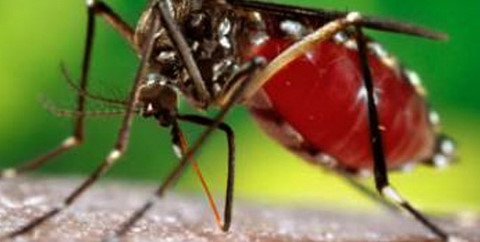
1) There is little or no personal responsibility among many people. Like the cartoon above indicates, every problem is somebody else's responsibility. Most Hondurans know how and where mosquitoes breed (in standing water). The dengue mosquito (Aedes Aegypti) does not travel far in its lifetime. On every authoritative website I've read, the number one effective recommendation to prevent dengue is to clean up trash and any receptacles that hold water on your own property.

A common breeding ground is among plastic rubbish that holds water. With nothing more than some trash bags and a few machetes, shovels and rakes, neighbors could work together to eliminate breeding grounds in their colonias. But very few neighborhoods take those simple actions that they could take to make their areas a little safer. To sit back and expect that any government can or will clean up every neighborhood is unreasonable; in Honduras, it is just plain stupid.

2) Actions taken by the government are expensive and ineffective. The manner of fumigating (thermal fogging) is scientifically one of the least effective methods and most enlightened governments have discontinued its use. I liken it to running down the street with a fly swatter trying to rid the world with flies while ignoring the garbage pile breeding flies in your backyard.

Experts from the US, the Pan American Health Association, and possibly other organizations have been here to analyze the effectiveness of Honduras' methods and the chemicals used. One of the issues discussed was whether or not the Aedes Agypti mosquito has become resistant. I have not been able to find that the results of those reports have ever been made public.

dengue fumigation HondurasThe chemical may (I'm not even entirely sure about this) kill all mosquitoes unfortunate enough to be out and about at that exact time and in the direct path of the spray, but that's about it. Authorities have said that the spray is only effective for a couple of hours. They can't expect to be able to spray every neighborhood and inside every house (which they do!). I'd be surprised if any neighborhood ever gets sprayed twice in a year, so what happens to all of the mosquitoes that are born the next day or the day after or next week or next month? Use your head! Fogging is a waste of money.

Two weeks ago a friend was in the San Pedro airport midday waiting for his flight to La Ceiba when all of a sudden white "smoke" starting coming through the ceiling vents right on top of the people sitting in the waiting area! Some people started panicking while others sat there unconcerned engulfed by the "smoke". Finally an announcement came over the speakers saying not to worry, that they were fumigating and there was no reason to leave the area as it was a non-toxic chemical. Enjoy!

dengue fogging HondurasEl Jefe had his own experience of being fumigated along with a lot of food that was sold to an unsuspecting public at a 2007 university function. Not one word of warning was given to the hundreds of students and visitors before a truck drove through the event spraying the public.

On the news, I see schools, houses, kitchens, cabinets, restaurants, day care centers, dishes, food, etc. etc. being engulfed in this smoke. I even see people with happy faces standing amid the fog, pleased that their house is being fumigated. Since everyone is convinced that this chemical is non-toxic, do you suppose that anyone washes the dishes, the school desks, or the kids' toys before they put them in their mouths?

Despite looking for years, I have never seen the name of the chemical used. It may or may not be less toxic, but I am 100% sure it is not being used as recommended. When was the last time you read any chemical insecticide label that said, "Go ahead and spray people and food with this"? Professors at the National University and several large businesses have refused to allow fumigation. Maybe they know something that we don't.


What should they do, in my not so humble opinion?

Honduras President Lobo cartoonPresident Lobo in front of the IMF and World Bank
with hat in hand. Fill 'er up!


1) The government needs to stop waiting for crises before acting. Money is no excuse. It costs more to deal with an emergency than it does to try to prevent one from occurring. If they came up with a decent plan, I'm sure that the money would flow in to help them implement it.

A serious educational and clean up campaign should start immediately to prevent another epidemic next year or the year after — which we all know will happen. Patronatos (neighborhood associations) should be contacted to set up neighborhood meetings. Use doctors, teachers, or others with authority to present a standard educational program to the neighbors and schoolchildren. Train the military to help organize the volunteers to clean up the colonias with the highest incidence. My guess is that those educational programs as well as programs for school children have already been developed in other countries. Don't reinvent the wheel when there is no need to do so.

2) The government should do some scientific research. I don't mean set up a commission of 'notables', hire million dollar consultants, or task the universities to develop "new science". Collaborate and find out what has worked in Central America and other tropical countries and use the best of those methods. Don't be so arrogant as to think that the way things have been done here are the way they have to be done forever. If it isn't working, admit it and change it. It wouldn't surprise me one bit, nor I'm sure most Hondurans, to find out that the chemical used is not because anyone even thinks it is effective but rather because someone made a dirty deal with someone else for the equipment and supplies.

dengue fumigation Honduras3) Promote the simple, natural things that people can do at no or very little cost, but again, investigate before you recommend them. We use more chemicals than ever before and have more dengue than ever before so what does that tell a logical person? There are some plants and herbs that when used properly, work pretty well for repelling insects for those who can't afford DEET, and most people in Honduras cannot afford it. Australia had success by encouraging children to place a certain type of water bug which consumes the mosquito larvae into their water storage containers (pilas)!

But don't invent ridiculous things that have no scientific basis. When I see so-called experts on TV suggesting that sticking cloves in a cut lemon and setting a couple of them around your house will prevent mosquitoes, I just want to scream at the stupidity. Better to spend that limited money on a trash bag and use it.

4) The government and/or municipalities should take responsibility for the things that individuals can't do anything about, like potholes that hold water, non-existent trash pickup in many poor areas, water systems that constantly leak, and sewage systems that don't drain causing permanent swamp-like conditions in some neighborhoods. But here again, if the government doesn't do it, the people have to do something. That can be as simple as borrowing a shovel and filling up a hole or digging out a ditch so that it no longer holds standing water. It can be done and it doesn't take an epidemiologist to do it.

5) The municipalities should consistently and fairly enforce the laws already on the books about maintenance of private properties. They should increase the fines so that they can afford to enforce them. This should be looked upon as a break-even activity, where the fines imposed are enough to pay the inspectors' salaries and the clean up crews. No one should have the right to put their neighbors at risk because of their own negligence.

This wouldn't be a popular move, because as El Catracho wrote [Google English translation], he places much of the blame on the municipalities for lack of trash pick up and street repair. He believes that the income from the fines would be used to finance political campaigns. El Catracho also believes that this would be an unfair burden on the middle class and businesses, since the poor can't pay and the rich and important will never be fined.


Summary

Death from dengue HondurasPlease don't think that I have no sympathy. Like almost everything else, this affects the poor more than anyone else. Seeing the heartbroken, sobbing parents who have lost a child on television brings tears to my eyes. I'm angry that people go through this year after year, especially because it is so darned unnecessary.

The government needs to reevaluate and stop being so stupid and arrogant. Obviously, they do not know what works or do not have the will to make it happen. And citizens need to realize that they have responsibility, too, and that since the government cannot protect them, they need to take steps to protect themselves and their children, even if it means that they spend a Saturday or Sunday every now and then cleaning up their own neighborhoods.

Will any of these common sense steps be taken?

No.

Why?

Because this is Honduras and that is how we do things here. Corruption and incompetence invade every aspect of life. For any solutions that you or I could come up with, I can tell you how corruption could overtake the process preventing success. A hundred times more effort would be put into figuring out how to rip off the government or aid funds than would be put into doing something that works. That is true from the top levels of government all the way down to the people who are supposed to be helped. Oh, there are exceptions, but not enough to make a difference.


Honduras President Lobo cartoon(Cartoon: President Lobo, "To unite, we have to share.")

If, for example, the government was to provide trash bags for clean up campaigns — because there are people who actually cannot afford to buy a trash bag — first a lot of political hiring would occur. They would need nice offices and cell phones and cars. Then the person in charge would set up a fake bidding process in which he would give the contract to a buddy in return for a kickback. The now expensive bags might sit in a warehouse until they deteriorated or maybe they would already be of such low quality that they are virtually worthless.


If the bags were delivered to the towns, probably the mayor or other city employees would divert a bunch of them and they would show up for sale somewhere. If the bags made it to the colonias, you'd probably see the patronato president and his friends with nicely bagged trash for the next months or see them for sale in the neighborhood pulpería. But, we would be treated to a special press conference in which a smiling president or minister of health would be personally delivering the bags to a mayor. Oh, and I forgot to say that the extra expense of having the bags printed with someone's picture or a political party emblem would undoubtedly be incurred.

The number of cases will diminish and not so many people will die. There will be no research, no plans for the future, no effective educational programs. Oh, there might be some million dollar program with a bunch of unqualified, highly paid political appointees from which all the money will disappear. The government and the people will forget that dengue exists .... until the next time when we will again see the authorities waiving their arms in the air and lamenting all the deaths and the lack of money to do anything about it, and begging for help from your tax dollars. The people will be clamoring for the government to fumigate their neighborhoods and kitchens, and the newspapers will be asking where all the money went.

Too negative?

Or too realistic for comfort?

Check back in a couple of years.


Newer posts Older posts
Home

Related Posts Plugin for WordPress, Blogger...